
In the UK, the demand for legitimate, flexible side hustles has increased dramatically. Rising living costs, stagnant wages, and the desire for financial security have pushed many full-time employees—especially those working Monday to Friday, 8am–4pm—to explore additional income streams that fit their schedules.
For people with access to a car, strong IT skills, and a moderate budget, the opportunities are better than ever. Thanks to digital platforms and gig-friendly UK services, earning an extra £200–£600 per month (or more) is not only possible but achievable without committing to another fixed part-time job.
This guide covers the most effective, UK-specific, trustworthy side hustles, along with data-driven insights, earning potential, risks, tax considerations, and step-by-step guidance to help you begin confidently.
Please note: As the current date is late 2025, these statistics are forecasts based on existing trajectories observed from 2023–2025 regarding inflation, technology adoption (specifically AI), and regulatory changes (HMRC reporting rules).
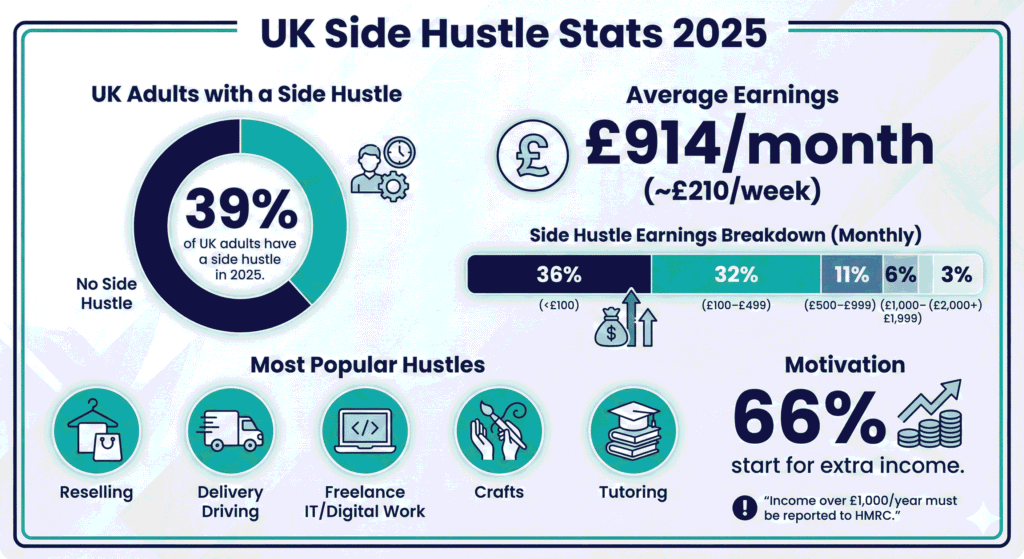
In 2025, side hustles continue to grow across the UK, with 39% of adults now earning extra income alongside their main jobs. The average monthly earning is £914, giving many people a meaningful financial boost. Income levels vary, with 36% making under £100 per month, 32% earning between £100–£499, 11% earning £500–£999, 6% reaching £1,000–£1,999, and 3% surpassing £2,000+.
The most popular side hustles include reselling, delivery driving, freelance IT and digital services, crafts, and tutoring, showing a strong mix of digital and gig-based opportunities. A key reminder for 2026: anyone earning over £1,000 per year from side hustles must report their income to HMRC and keep proper records.
UK Side Hustle Report: The 2026 Landscape
Executive Summary: The “Embedded” Economy
By 2026, the “side hustle” has largely transitioned from a temporary crisis response to a permanent fixture of the UK working landscape. While the acute cost-of-living crisis of earlier years has stabilized into sustained pressure, the reliance on secondary income streams remains high. The primary shift in 2026 is the professionalisation of the sector, driven by AI tools and tighter tax compliance awareness.
1. Prevalence and Participation
The market has continued to grow, though the rate of new entrants has slowed as the market reaches saturation in certain sectors.
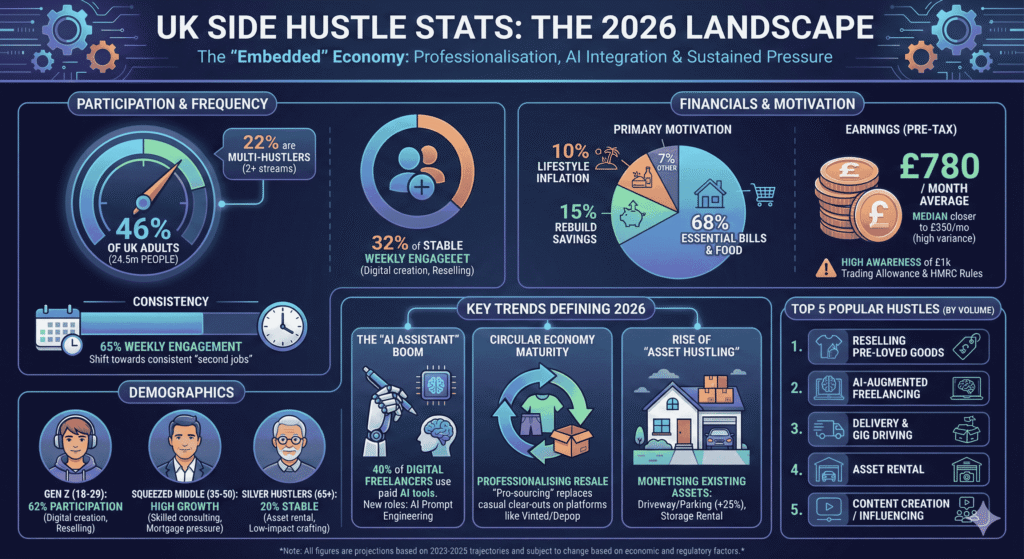
- Total Participation: It is projected that 46% of UK adults (approximately 24.5 million people) currently have at least one active side hustle. This is up from estimates of around 40% in 2024.
- The “Multi-Hustlers”: Of those with a side hustle, 22% manage two or more distinct secondary income streams (e.g., reselling clothes and freelance writing).
- Frequency: The “casual” hustler is declining. 65% of participants engage in their side hustle at least weekly, indicating a shift toward consistent second jobs rather than sporadic gigs.
2. Financials and Motivation
The economic drivers remain incredibly strong, though the definition of necessity has broadened.
- Primary Motivation:
- 68% cite “paying for essential bills and food” as their main driver.
- 15% are hustling specifically to rebuild savings depleted during 2023–2025.
- 10% are focused on “lifestyle inflation” (affording holidays/luxuries they had previously cut back on).
- Average Earnings: The average monthly income from a side hustle has risen to roughly £780 per month (pre-tax).
- Note on variance: This average is heavily skewed. The median is closer to £350 per month, reflecting the large number of casual resellers versus high-earning freelance consultants.
- The £1k Barrier: Following widespread publicity regarding the 2024 HMRC digital platform reporting rules, awareness of the £1,000 Trading Allowance is at an all-time high (88% awareness among participants).
3. Key Trends defining 2026
The “AI Assistant” Boom
The defining characteristic of the 2026 side hustle market is the integration of generative AI to lower barriers to entry and increase efficiency.
- 40% of digital freelancers (writers, designers, coders) now openly use paid AI subscriptions to augment their output.
- New hustle categories have emerged, such as “AI Prompt Engineering / Consulting” and “AI-Assisted Content Scaling,” rapidly replacing traditional entry-level copywriting gigs.
The Circular Economy Maturity
Reselling pre-owned goods remains the single most popular entry point due to its low barrier to entry and sustainability angle.
- Vinted and Depop remain the dominant platforms by volume of users.
- However, the market is professionalising. Casual wardrobe clear-outs are being supplemented by “pro-sourcing”—individuals buying wholesale returns or charity shop stock specifically to flip for profit.
The Rise of “Asset Hustling”
Moving beyond selling labor, more Britons are monetising existing assets to combat high interest rates/mortgages.
- Driveway/Parking Space Rental: Up 25% year-on-year in major cities.
- Storage Rental: Renting out lofts or spare garages for neighbour storage has become a top 10 hustle for homeowners.
4. Demographics
- Gen Z (Ages 18-29): Remains the most active demographic, with 62% participation. They dominate the digital creation, reselling, and influencer spaces.
- The “Squeezed Middle” (Ages 35-50): This group has seen the highest growth in participation since 2024. Driven by mortgage refinances and childcare costs, they are gravitating toward high-skilled freelance consulting (leveraging their primary career skills “on the side”).
- Silver Hustlers (65+): Participation has stabilized at around 20%. This group primarily focuses on monetising assets (renting rooms/spaces) or low-impact crafting/selling.
Top 5 Most Popular Side Hustles in 2026 (by volume of participants)
- Reselling Pre-loved Goods (Clothing, tech, and furniture on digital platforms).
- AI-Augmented Freelancing (Writing, graphic design, and administrative tasks assisted by AI tools).
- Delivery & Gig Economy Driving (Remains a staple for immediate cash flow).
- Asset Rental (Driveways, storage space, camera gear).
- Content Creation / Niche Influencing (Monetising smaller, highly engaged communities on platforms like TikTok and emerging competitors).
1. Delivery Driving & Parcel Drop-Off (Using Your Car)
Why It Works
If you already own a car, delivery gigs offer unmatched flexibility. You choose your working hours—perfect for evenings or weekends after a 8-4 job.
UK Platforms
- Amazon Flex
- Evri (courier rounds)
- DPD Local Owner Driver opportunities
- Uber Eats / Deliveroo / Just Eat (if you prefer food delivery)
Earning Potential (UK Data)
- Amazon Flex: £13–£17 per hour
- Food delivery apps: £10–£15 per hour
- Courier parcel rounds: £50–£120 per day (part-time routes)
Most part-time drivers earn £250–£500/month with 5–8 hours per week.
Risks & Considerations
- Wear and tear on your car
- Self-employed responsibility
- Weather interruptions for food delivery
How to Start (Minimal Cost)
- Ensure your car insurance supports “business use.”
- Pass any background checks (Amazon Flex has ID verification).
- Use your IT knowledge to optimize routes using Google Maps saved routes, Waze, and battery-efficient navigation.
- Track your mileage using apps like Stride or Everlance for tax purposes.
2. Freelance IT Services (Website Development, Tech Support, SEO, PPC, or Digital Marketing)
Why It Works
If you have strong IT skills, this is one of the highest-paying and most scalable side hustles in the UK. You can work evenings, weekends, or take small projects that fit your schedule.
High-Demand Services
- Website creation (WordPress/Wix)
- Speed optimisation
- Local business SEO
- PPC campaign setup
- Tech support for small businesses
- Data cleaning or automation with Python/Excel
- Social media optimisation
Earning Potential (UK Freelance Market)
According to Upwork, Fiverr, and UK digital agencies:
- Basic websites: £150–£500 per site
- SEO audits: £80–£300
- Monthly SEO retainers: £150–£600 (small clients)
- Tech support tasks: £25–£50/hour
A skilled professional can earn £400–£1,200/month even with limited weekly availability.
Risks & Considerations
- Competition is high—portfolio is essential
- Some projects require weekend availability
- Clients may expect fast responses
How to Start
- Build a simple portfolio using WordPress, Notion, or even Google Drive case studies.
- Create accounts on:
- Upwork
- Fiverr
- PeoplePerHour
- Bark (popular in the UK)
- Offer a £50–£100 starter package to gain quick reviews.
- Use AI tools like ChatGPT to speed up proposals, emails, and documentation.
3. Rent Out Your Car or Become a Part-Time Ride-Sharing Partner
Why It Works
If you prefer not to deliver food or parcels, renting out your car or driving occasionally for fares can generate passive or semi-passive income.
UK Platforms
- Turo (car sharing)
- Hiyacar
- Uber (part-time)
- Bolt
- Ola (limited locations)
Earning Potential
- Turo car rental: £200–£500/month for a standard car
- Uber/Bolt: £15–£20/hour (after fees)
Doing 1–2 evening shifts per week can generate £300–£600 monthly.
Risks & Considerations
- Insurance requirements
- Vehicle depreciation
- Ride-sharing requires a PHV licence (London has different rules)
How to Start
- Check car eligibility (age, condition).
- Add required insurance (Turo provides coverage).
- Clean and photograph your car professionally.
- Use your IT skills to analyse peak demand times to maximise income.
4. Developing & Selling Small Digital Products
This works extremely well for IT-skilled individuals and can grow into a passive income stream.
Digital Products You Can Sell
- Mini SaaS apps
- WordPress themes
- Lead magnets (templates, checklists, SEO guides)
- Simple automation tools
- E-books
- Canva templates
Earning Potential
- Most UK creators earn between £50–£500/month
- Top sellers easily exceed £1,000/month
Risks & Considerations
- Slow initial sales
- Requires marketing consistency
How to Start
- Identify a problem (e.g., “Local plumbers need simple SEO templates”).
- Create a small product solution.
- Sell it via:
- Etsy
- Gumroad
- Shopify starter plan
- Use social media or LinkedIn to drive traffic.
5. Providing Tech Tutoring (Evenings or Weekends)
Why It Works
A flexible, premium service where you help people with:
- Basic computer skills
- Office 365 setup
- Smartphone support
- Website or email setup
- Social media help for small business owners
Earning Potential
UK tutors charge:
- £20–£40/hour locally
- £25–£60/hour online
With 3–5 hours per week, you can earn £200–£500/month.
How to Start
- Advertise on Nextdoor, Facebook Marketplace, or Tutorful
- Create a simple landing page for bookings
- Use Calendly + Zoom for scheduling and calls
6. Local Niche Services Using Tech + Car Convenience
These are hybrid offline-online gigs ideal for evenings:
Examples
- Google Business Profile setup for local shops
- One-time SEO optimisations for micro-businesses
- Local photography for Airbnbs or real estate (using your car for travel)
- Computer repair pickup/drop-off service
- E-commerce product photography service
Earning Potential
- GBP setup: £50–£120
- Photoshoot: £70–£200
- PC repair: £20–£60 per fix
7. Online Reselling (Retail & Online Arbitrage)
Buy products discounted locally or online, and resell on:
- eBay
- Vinted
- Facebook Marketplace
- Amazon FBA (simple low-cost items)
Earning Potential
Part-time UK resellers earn:
- £150–£500/month on average.
How to Start
- Use apps like ClearanceScanner or Keepa
- Scan deals from Tesco, Asda, Argos, B&M
- Resell in your free time
Legal & Tax Considerations for UK Side Hustlers
1. Registering Your Side Income
UK law requires you to report income from side hustles if it exceeds the £1,000 trading allowance (source: GOV.UK – “Tax on trading income”).
If you earn more, you must register as self-employed through HMRC and complete a Self-Assessment tax return.
2. National Insurance
- Contributions apply if your profits exceed the Class 2 and Class 4 thresholds.
3. Record Keeping
Maintain:
- Invoices
- Fuel and mileage logs
- Receipts
- App earnings statements
4. Insurance
Delivery driving requires hire and reward insurance.
Ride-sharing requires PHV insurance.
Selling digital products normally requires no special insurance.
Official References
- HMRC Self-Assessment guidance
- GOV.UK “Set up as a sole trader”
- GOV.UK “Tax on self-employed earnings”
- Platforms: Amazon Flex, Uber, Turo, Fiverr, Upwork UK
Practical Tips to Maximise Your Side Hustle Success
1. Use Your IT Skills
- Automate repetitive tasks using scripts or AI
- Use dashboards to track time vs income
- Build a digital portfolio to attract higher-paying clients
2. Start Small
Test each side hustle for 2–3 weeks before committing long-term.
3. Protect Your Main Job
Avoid commitments that require daytime availability.
4. Track Everything
Use apps for:
- Mileage
- Invoices
- Tax estimates
- Time tracking
5. Focus on Quality
Reliable communication and punctuality can double your client referrals.
Conclusion: Start with What Fits Your Lifestyle
You don’t need another part-time job to earn a few hundred pounds each month in the UK. Whether you choose delivery driving, freelance IT work, car sharing, or creating digital products, the key is to pick something that matches your skills, time, and personality.
Stay consistent, stay compliant with UK tax rules, and use your skills strategically—and you can build a flexible income stream without sacrificing your main job or your weekends.
Take the next step: Review your skills, choose one hustle from this list, and commit to trying it for the next 30 days. Financial flexibility is closer than you think.