
Social Media Strategy in China is no longer optional — it is essential. In today’s hyper-connected world, China stands out as a colossal digital powerhouse. With over 1 billion internet users, China has the largest online community globally. Nowhere else does social media play such an integral role in daily life, business, commerce, and culture.
For brands looking to succeed in this vibrant market, understanding China’s unique social media landscape is critical. From navigating strict government regulations to leveraging the immense power of platforms like WeChat, Douyin, and Weibo, an effective social media strategy in China can spell the difference between success and obscurity.
In this complete guide, you’ll learn:
- The most popular social media platforms in China (2025 updated)
- Essential statistics and usage patterns
- How Chinese users engage differently than Western audiences
- Effective marketing strategies tailored for China
- Case studies of brand successes
- Challenges, regulations, and how to navigate censorship
- Future trends and emerging opportunities
Whether you’re a global brand, a growing e-commerce company, or a startup dreaming of expanding eastward, this in-depth guide will equip you with all the knowledge you need to thrive in China’s fascinating and evolving digital environment.
Let’s dive in!
Table of Contents
Stay ahead of the curve — let’s unlock your brand’s potential in the world’s fastest-growing digital economy!
1. The Rise of Social Media in China: Why It Matters
China’s digital landscape is a phenomenon unlike any other in the world. With over 1.05 billion internet users as of 2025, China commands the largest online community globally. What sets China apart isn’t just its massive numbers — it’s the deeply integrated role social media plays in everyday life, business transactions, and consumer behavior.
Social media in China is not just a place for entertainment or communication; it is the heartbeat of digital commerce, customer service, branding, and lifestyle. Platforms like WeChat, Douyin, and Weibo have evolved far beyond traditional social networking sites. They now serve as multi-functional ecosystems where users can shop, pay bills, book doctor appointments, manage investments, and more — all without leaving the app.
Key Facts to Know:
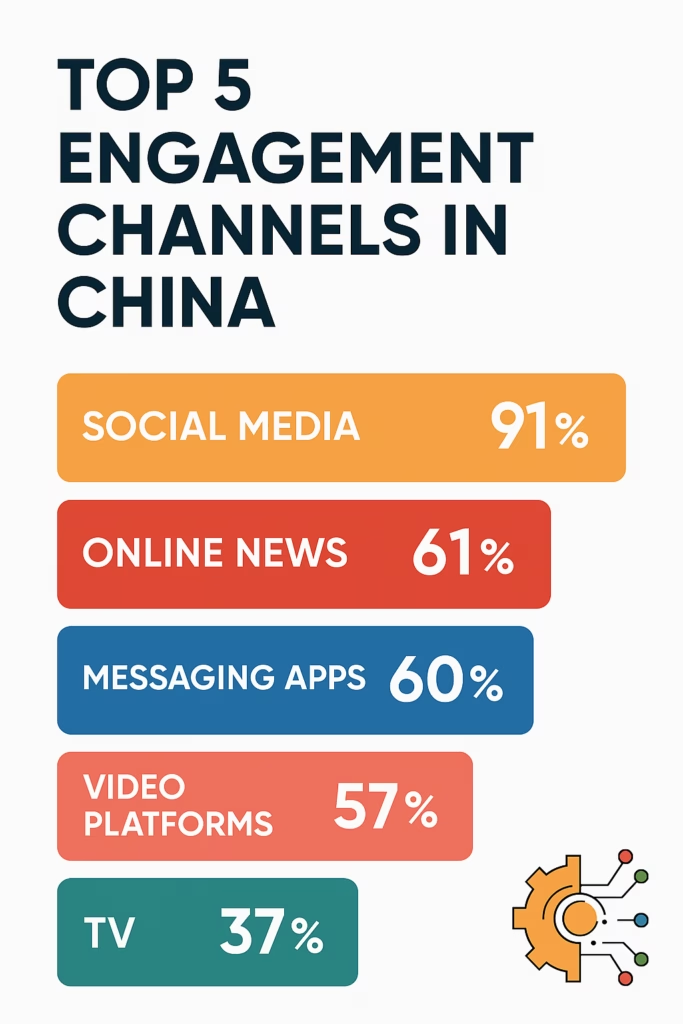
- 91% of Chinese internet users are active on social media.
- The average user spends 46 minutes daily on social media platforms.
- Chinese users are members of an average of 3.4 social networks, compared to 2.1 for users in the United States.
- The social media ecosystem heavily influences shopping habits, brand loyalty, and product discovery.
Why It Matters for Brands
Understanding social media usage in China is crucial for businesses seeking to tap into this market. Unlike Western users who may separate communication, shopping, and entertainment across different apps, Chinese consumers experience all these activities fluidly within single platforms.
This offers brands unique advantages:
- Direct e-commerce integration within social media platforms.
- Rapid brand awareness through viral content and influencer collaborations.
- Highly engaged audiences who are willing to interact with brands and provide feedback.
- Opportunities for customer service and loyalty building directly through social channels.
In China, social media strategy isn’t optional; it is central to every brand’s marketing success.
By crafting a smart, culturally attuned social media strategy, brands can unlock extraordinary growth in the world’s largest and most dynamic digital economy.
2. Top Social Media Platforms in China (2025 Updated)
China’s digital world is ruled by a unique set of social media platforms that differ greatly from the West. Due to government restrictions on platforms like Facebook, Instagram, and Twitter, Chinese tech companies have created their own powerful alternatives. Understanding these platforms is critical to building an effective social media strategy in China.
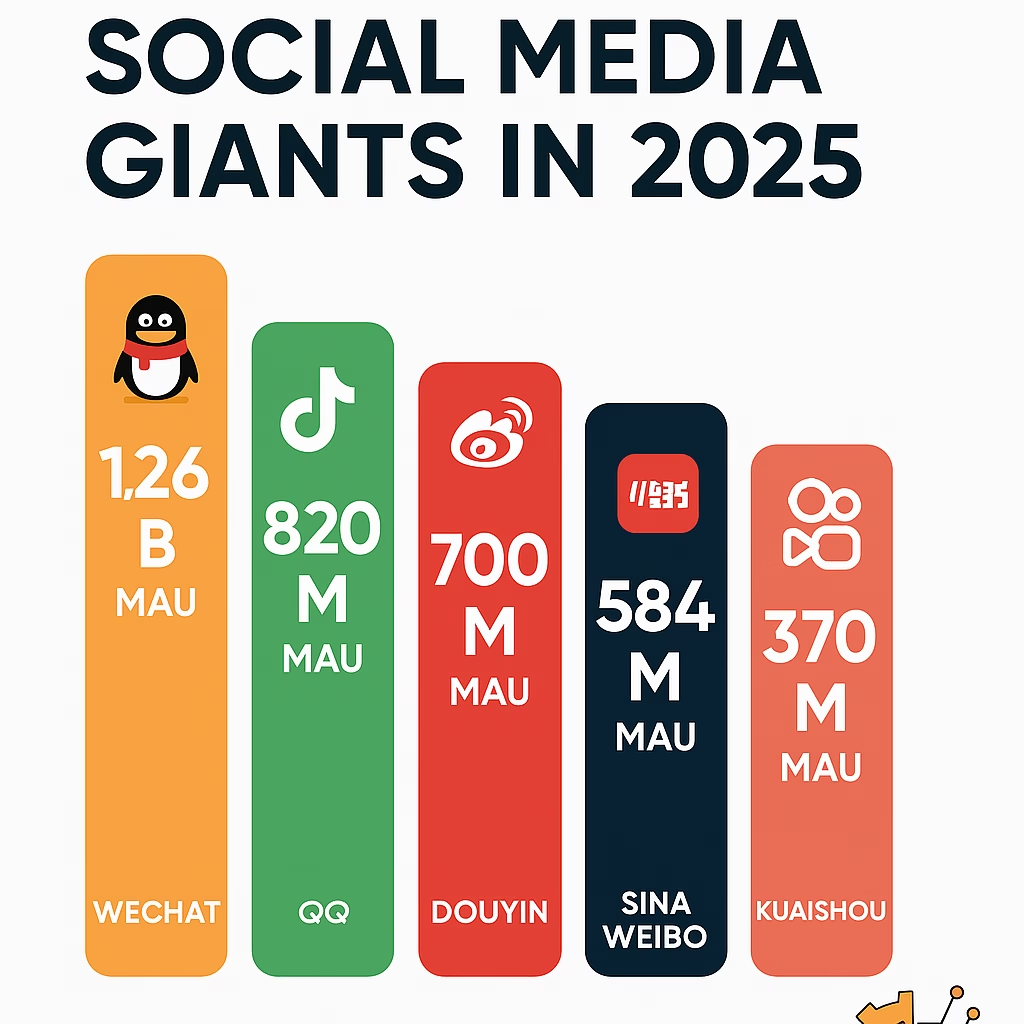
Below are the key players dominating the Chinese social media landscape in 2025:
WeChat — 微信 (Weixin)
- Monthly Active Users (MAU): 1.26 billion
- Main Uses: Messaging, payments, e-commerce, customer service, mini programs.
WeChat is the undisputed king of Chinese social media. But it’s more than just a messaging app. Think of it as an “everything app” — a complete digital ecosystem where users chat, shop, pay bills, book flights, and even manage business communication.
Top Features for Businesses:
- WeChat Official Accounts (for brands)
- WeChat Mini Programs (apps within the app)
- WeChat Pay (cashless payments)
- Targeted advertising based on user behavior
A strong WeChat presence is mandatory for brands aiming to succeed in China.
Douyin — 抖音 (Chinese TikTok)
- Monthly Active Users (MAU): 700 million
- Main Uses: Short-form video, live-stream shopping, viral marketing.
Douyin, the Chinese version of TikTok, has exploded in popularity among Gen Z and Millennials. Its highly personalized algorithm ensures users get hooked on endless streams of 15 to 60-second videos.
Top Features for Brands:
- Short viral videos
- Live-stream commerce integration
- Branded challenges and hashtag campaigns
Brands that master creative, engaging video content will find Douyin a powerful driver for brand awareness and sales.
Sina Weibo — 新浪微博
- Monthly Active Users (MAU): 584 million
- Main Uses: Microblogging, news sharing, celebrity culture, public conversations.
Often described as China’s version of Twitter, Sina Weibo is the go-to platform for public discussions, viral news, and celebrity influence.
Top Features for Businesses:
- KOL (Key Opinion Leader) collaborations
- Trending hashtags
- Brand pages and advertising tools
- Live streaming for public events
Luxury brands, in particular, thrive on Weibo due to its premium audience and viral nature.
QQ and QZone
- QQ Monthly Active Users: 820 million
- QZone Monthly Active Users: 600 million
- Main Uses: Messaging (QQ), blogging and social networking (QZone).
Once the dominant platform, QQ still commands a massive user base, especially among younger audiences and those in second- and third-tier cities.
Top Features:
- Instant messaging and group chats
- Gaming, music, education integrations
- QZone for blog posts, photo sharing, and social updates
Although somewhat overshadowed by WeChat, QQ remains crucial for brands targeting students and rural markets.
Xiaohongshu — 小红书 (Little Red Book)
- Monthly Active Users (MAU): 300 million+
- Main Uses: Lifestyle blogging, product reviews, e-commerce.
Xiaohongshu is a mix of Instagram, Pinterest, and Amazon. It’s the go-to platform for Chinese consumers seeking trustworthy product recommendations, especially in fashion, beauty, and lifestyle categories.
Top Features for Brands:
- UGC (User-Generated Content) marketing
- Influencer partnerships
- In-app shopping feature
If you’re targeting Chinese women aged 18–35, Xiaohongshu is a goldmine.
Kuaishou — 快手
- Monthly Active Users (MAU): 370 million
- Main Uses: Short videos, live streams, rural engagement.
Kuaishou offers similar content to Douyin but is more popular in China’s smaller towns and rural areas. Its users are highly loyal and extremely engaged.
Top Features:
- Live-stream selling
- Community-driven content
- Regional influencer marketing
Brands wanting to penetrate lower-tier cities should not ignore Kuaishou.
Zhihu — 知乎
- Monthly Active Users (MAU): 150 million
- Main Uses: Q&A discussions, expert insights, thought leadership.
Zhihu operates like a Chinese Quora, where knowledgeable users discuss a wide range of professional and lifestyle topics. It is ideal for B2B marketing, high-end product promotion, and establishing credibility.
Top Features:
- In-depth content marketing
- Expert panels
- Knowledge-based community building
If you’re selling complex products, services, or targeting educated professionals, Zhihu offers high-quality leads.
3. Key Social Media Statistics and Trends in China
Understanding social media statistics and user trends in China is critical for building successful campaigns. Unlike Western markets, the Chinese digital environment operates on different patterns, preferences, and cultural expectations.
Here are the most important statistics and trends you need to know in 2025:
Updated Active User Numbers (2025)
- WeChat — 1.26 billion monthly active users (MAU)
- QQ — 820 million MAU
- QZone — 600 million MAU
- Douyin — 700 million MAU
- Sina Weibo — 584 million MAU
- Xiaohongshu — 300+ million MAU
- Kuaishou — 370 million MAU
- Zhihu — 150 million MAU
Key Insight:
Most users participate on multiple platforms simultaneously, making cross-platform strategies highly effective.
Demographics: Age, Gender, Usage Patterns
Social media users in China show distinct demographic patterns compared to Western users.
Gender Breakdown:
- Male Users: 50% to 55%
- Female Users: 45% to 50%
Interesting Fact: Women dominate certain platforms like Xiaohongshu (Little Red Book), which heavily influences beauty, skincare, and luxury buying decisions.
Age Distribution:
- Under 18 years old: 15%–20%
- 18-24 years old: 25%–30%
- 25-34 years old: 30%–35% (largest group)
- 35-44 years old: 15%–20%
- 45 and above: 10%–15%
Key Insight:
Brands targeting Millennials (25-34) and Gen Z (18-24) will find the largest, most active consumer bases on platforms like Douyin, Weibo, and WeChat.
Time Spent on Social Media
- Average Time: 46 minutes per day.
While 46 minutes might seem low compared to global averages, Chinese users are extremely purpose-driven during their time online. Instead of casual browsing, they actively research products, engage with brands, leave reviews, and shop directly inside apps.
Top Activities:
- Discovering new products
- Reading reviews and feedback
- Watching live shopping streams
- Participating in brand campaigns and promotions
Real Name Usage and Privacy
Unlike Western users who often create anonymous profiles, Chinese users’ social media accounts must comply with Real-Name Registration laws. However:
- Only 38% of users consistently use their real names when posting content.
- Many users still prefer to engage with a degree of anonymity, especially when discussing sensitive topics.
Key Insight:
Brands must respect user privacy while building trust, offering personalization without overstepping cultural boundaries.
Summary: Why These Trends Matter for Marketers
- Short videos, live streaming, and influencer marketing dominate content consumption.
- Brand loyalty is often driven by user recommendations, not ads.
- You must localize content not only linguistically but culturally to resonate with these highly specific demographics.
By tailoring your strategies based on these demographic and behavioral insights, you’ll dramatically increase your chances of success in China’s dynamic market.
4. Shopping Behavior and Social Commerce in China
Social media in China isn’t just about sharing selfies and status updates — it’s deeply intertwined with shopping behavior. In fact, Chinese consumers rely on social media platforms at every stage of their purchasing journey, from product discovery to payment and feedback.
If you’re a brand targeting the Chinese market, understanding how users shop through social media is vital.
Influence of Social Media on Purchases
Chinese social media platforms strongly influence purchasing decisions:
- 87% of users discover new products through social media.
- 86% of users read reviews before purchasing.
- 93% of users share their shopping experiences on social platforms.
- 63% of consumers trust recommendations from people they follow on platforms like WeChat and Weibo.
Key Insight:
Chinese users are highly engaged shoppers. They don’t just browse passively — they actively seek opinions, share feedback, and influence their communities’ buying decisions.
For brands, this means two things:
- Peer recommendations are more powerful than direct advertising.
- Engagement-focused content wins over sales-driven content.
Live-streaming Commerce Trends
Live-streaming has revolutionized social commerce in China.
Key Trends:
- Douyin and Kuaishou dominate live-streaming e-commerce, allowing brands and influencers to sell directly during live sessions.
- Live-streaming accounted for $480 billion in e-commerce sales in China in 2024, and this number is expected to rise in 2025.
- Influencers (KOLs) host live sessions showcasing products, answering questions, and offering limited-time discounts.
Why Live-streaming Works:
- Real-time product demonstrations build trust.
- Exclusive promotions create urgency.
- Interactive chat features foster community engagement.
Pro Tip:
Brands should collaborate with trusted influencers for live events, rather than hosting purely corporate streams. Authenticity drives sales!
Mini Programs and Instant Shopping
Mini Programs inside WeChat have transformed how Chinese users shop online.
What are Mini Programs?
➡️ They are “sub-apps” within WeChat that allow users to shop, play games, order food, and even access government services — without downloading separate apps.
For Brands:
- You can build a fully functional e-commerce store inside WeChat.
- Seamless user experience = higher conversion rates.
- Loyalty programs, coupons, and personalized offers can be integrated easily.
Key Insight:
Mini Programs helped drive $450 billion in sales through WeChat in 2024, making them an essential part of any Chinese digital marketing strategy.
Summary: How to Succeed in Chinese Social Commerce
✅ Create authentic, recommendation-driven content.
✅ Leverage live-streaming events with influencers.
✅ Build Mini Programs or integrate your store inside WeChat.
✅ Focus on community engagement over direct selling.
✅ Highlight customer feedback and reviews prominently.
Remember:
In China, social media and shopping are no longer separate activities — they are one and the same.
5. Business Adoption of Social Media in China
Social media is not only critical for consumer engagement in China — it has also become an essential tool for business communication, customer service, branding, and even internal operations.
Companies in China, whether large corporations or small startups, are using social media platforms to connect with customers, partners, and even employees more efficiently than ever before.
Let’s look at how businesses are leveraging the biggest platforms:
Businesses on Weibo
Weibo isn’t just a public social network — it’s also a thriving marketplace for brands.
- Over 400,000 businesses maintain official brand accounts on Weibo.
- Luxury brands dominate Weibo with 86% of major international luxury brands actively marketing there.
- 74% of Chinese consumers expect customer service on social platforms — Weibo is often the first touchpoint for service-related inquiries.
Key Strategies on Weibo:
- Partner with celebrities and KOLs (Key Opinion Leaders) to promote your brand.
- Use trending hashtags to increase visibility.
- Host contests, polls, and giveaways to boost engagement.
Pro Tip:
Weibo users are highly reactive to viral trends — brands need to be agile and ready to jump into trending conversations.
QQ and WeChat for Business Communication
While WeChat dominates mobile social networking, QQ still plays a major role in business communication, especially among younger professionals and in lower-tier cities.
QQ Business Usage:
- 37.6% of all business communication is conducted through QQ.
- QQ is favored for customer support, internal team chats, and educational services.
WeChat Business Usage:
- 23% of business communications happen on WeChat.
- It is used extensively for customer service chats, professional networking, group meetings, and internal corporate updates.
- WeChat Work (now known as WeCom) is Tencent’s official tool for formal business communication, integrating with mini programs and CRM systems.
Benefits of Using WeChat for Business:
- Ability to set up Official Brand Accounts to manage customer relationships.
- Mini Programs allow for appointment bookings, customer service chats, e-commerce integration, and loyalty programs.
- Group chats can serve for VIP customer groups, support groups, or internal team management.
Why Businesses Embrace Social Media in China
- Direct Customer Relationships: Engage customers without middlemen.
- Integrated Payments: WeChat Pay and QQ Wallet make transactions frictionless.
- Customer Support: Fast, real-time responses build trust and loyalty.
- Brand Awareness: Platforms like Weibo and Douyin offer incredible reach for new product launches and promotions.
- Data-Driven Insights: Platforms provide detailed analytics for retargeting, personalization, and ROI tracking.
Summary: How to Use Social Media Effectively for Business in China
✅ Build official brand pages on WeChat, Weibo, and QQ.
✅ Leverage mini-programs for frictionless commerce inside WeChat.
✅ Offer real-time customer support via messaging apps.
✅ Participate actively in trending conversations to remain visible.
✅ Analyze platform-specific analytics to fine-tune marketing strategies.
Social media isn’t a “nice to have” for Chinese businesses — it’s an essential pillar of modern business success.
6. Building Brand Trust in China: Social Proof and Recommendations
In China’s competitive and fast-paced digital market, trust is everything.
Consumers are highly cautious about brands, especially foreign ones, and tend to rely heavily on peer recommendations, reviews, and social validation before making purchasing decisions.
If you want to build a successful brand presence in China, establishing social proof must be at the heart of your strategy.
The Power of Peer Recommendations
Chinese consumers place a high degree of trust in recommendations from friends, family, and online communities.
- 63% of users say they trust products recommended by people they follow on social media (especially on platforms like WeChat, Xiaohongshu, and Weibo).
- 92% of Douyin users have purchased a product after seeing it recommended in a video or live stream.
- 74% of consumers expect brands to engage in real-time, personalized conversations on social platforms.
Unlike in Western markets, where ads still hold some sway, in China:
- Personal recommendations > Paid advertisements
Key Insight:
Word-of-mouth marketing and peer validation are more effective in China than polished brand messages.
User-Generated Content (UGC) Drives Credibility
Encouraging users to create content around your brand is one of the most powerful ways to build trust.
Examples of UGC Campaigns:
- Photo contests on WeChat Moments.
- “Share your experience” campaigns on Xiaohongshu (Little Red Book).
- Fan communities and ambassador programs on Weibo.
- Customer testimonials and review videos on Douyin.
Pro Tip:
Incentivize user participation through rewards, coupons, or featuring top posts on your official brand page.
Influencers (KOLs) as Trust Builders
In China, influencers are known as KOLs (Key Opinion Leaders), and they play a massive role in shaping consumer opinions.
- KOLs enjoy deep trust and loyalty from their followers.
- Their endorsements are perceived as more authentic than corporate advertising.
- Even micro-KOLs (with 10k-50k followers) can drive better engagement and higher conversion rates than celebrities for niche products.
KOL Marketing Tip:
Choose KOLs who align naturally with your brand values instead of just picking the biggest names.
Authenticity matters more than follower count.
Customer Service and Responsiveness
Customer service isn’t an afterthought in China — it’s an expectation.
- 75% of online users expect brands to respond to inquiries or complaints within hours, not days.
- 57% of users follow brands on social media specifically for customer support and discount information.
Best Practices:
- Assign dedicated staff to manage WeChat and Weibo brand accounts.
- Offer real-time chat support via WeChat or Mini Programs.
- Respond proactively to user feedback, especially negative comments.
A fast, respectful response to complaints or queries can turn skeptics into brand advocates.
Summary: How to Build Trust for Your Brand in China
✅ Focus on peer recommendations and UGC rather than traditional ads.
✅ Collaborate strategically with trusted KOLs and micro-influencers.
✅ Build vibrant communities around your brand on platforms like WeChat, Douyin, and Xiaohongshu.
✅ Prioritize real-time, high-quality customer support on social platforms.
Trust and authenticity are your two most powerful assets when marketing to Chinese consumers.
7. The Role of Luxury Brands and High-End Marketing in China
China is not only the world’s largest online market — it’s also one of the fastest-growing luxury markets globally.
Luxury brands like Louis Vuitton, Gucci, Chanel, and Cartier are thriving in China, and social media platforms are at the center of their success.
Understanding how luxury branding works differently in China will help you tap into this highly lucrative segment.
Luxury Brands Are Embracing Chinese Social Media
- 86% of luxury brands are active on Sina Weibo, using it to engage directly with affluent consumers.
- There has been a 51% rise in luxury brand presence on WeChat over the past few years.
- 58% of mainland Chinese respondents say WeChat influences their luxury brand choices, with 52% saying the same for Weibo.
Luxury brands in China aren’t just selling products — they’re selling lifestyle experiences through storytelling, influencer collaborations, and exclusive social media campaigns.
Why Chinese Consumers Love Luxury Brands
- Social status: Owning luxury products is often seen as a symbol of success and prestige.
- Quality and craftsmanship: Chinese consumers associate luxury brands with superior quality.
- Self-reward and personal enjoyment: Beyond showing off wealth, many young consumers now buy luxury goods to reward themselves.
Winning Strategies for Luxury Brands in China
1. Localized Storytelling
Luxury brands that succeed don’t just translate their ads — they tell stories that resonate emotionally with Chinese culture, festivals (like Lunar New Year), and modern aspirations.
Example:
- Dior’s Lunar New Year campaigns use traditional Chinese elements but reinterpret them in a modern, sophisticated way.
2. VIP Programs via WeChat Mini Programs
Luxury houses like Gucci and Louis Vuitton create exclusive VIP communities inside WeChat. These Mini Programs allow for private sales, limited-edition product launches, and personalized client services.
3. Influencer (KOL) Collaborations
- Working with luxury-focused KOLs and even celebrity brand ambassadors ensures authenticity.
- Douyin and Weibo are key channels for luxury brand-influencer partnerships.
Tip:
High-end consumers trust micro-influencers (niche luxury reviewers) even more than mega-celebrities sometimes.
4. Live Streaming Exclusive Launches
Brands are hosting private live-stream events to launch products — giving fans a front-row seat to virtual fashion shows and product reveals.
Examples of Luxury Brands Winning Big
- Burberry: Leveraged WeChat Mini Programs for a pop-up store experience that allowed fans to reserve exclusive items.
- Prada: Increased its Weibo presence by engaging fans with behind-the-scenes footage of fashion shows.
- Louis Vuitton: Worked with top Chinese influencers for Douyin challenges that became viral across China.
Summary: How to Master Luxury Marketing in China
✅ Localize your storytelling deeply (not just translate ads).
✅ Build VIP WeChat experiences and loyalty programs.
✅ Partner authentically with trusted luxury KOLs.
✅ Use live-streaming to create exclusive brand experiences.
✅ Focus on community and emotional connection, not just prestige.
In China’s booming luxury market, social media is your showroom, your storefront, and your voice — all in one.
8. Navigating Censorship: Compliance and Best Practices
One of the most distinctive aspects of doing business on Chinese social media is dealing with government regulations and censorship. Unlike Western markets where freedom of speech is a guiding principle, China’s digital ecosystem operates under strict regulatory oversight.
Understanding how to navigate these rules is non-negotiable if you want to succeed without risking fines, account suspension, or brand damage.
How Chinese Social Media Censorship Works
The Chinese government maintains tight control over online content through a system often referred to as the Great Firewall.
This includes:
- Blocking access to foreign platforms (e.g., Facebook, Instagram, Twitter, YouTube).
- Monitoring and filtering domestic social media platforms (e.g., WeChat, Weibo, Douyin).
- Removing content deemed politically sensitive, socially destabilizing, or contrary to national interests.
- Imposing real-name registration to link online activity to real-world identities.
Key Insight:
Social media companies like Tencent (WeChat) and Sina (Weibo) are responsible for censoring content on their platforms to comply with government regulations — or face penalties themselves.
Commonly Censored Content
Brands must be cautious about publishing or associating with the following types of content:
- Political dissent or criticism of the Chinese government.
- Sensitive historical events (e.g., Tiananmen Square).
- Content related to separatist movements (e.g., Taiwan, Tibet, Hong Kong independence).
- Religious extremism.
- Rumors, fake news, or misinformation.
- Vulgar, obscene, or controversial material.
Note: Even seemingly harmless content can trigger issues if misinterpreted, so cultural sensitivity is crucial.
Best Practices for Staying Compliant
✅ Work with Local Experts
Partner with Chinese marketing agencies or hire consultants who understand the nuanced local regulations.
✅ Pre-approve Content Locally
Before publishing, have all campaigns reviewed by someone fluent in Chinese regulations and cultural expectations.
✅ Focus on Positive Messaging
Highlight harmony, family values, economic prosperity, innovation, and cultural pride — these themes align well with government priorities.
✅ Avoid Sensitive Topics Altogether
Stay clear of controversial or political issues unless you have extremely localized expertise.
✅ Monitor Comments and UGC
Brands are responsible for managing comments and user-generated content on their platforms. Remove inappropriate content swiftly.
✅ Adapt Quickly
Regulations change frequently. Stay updated on new rules affecting advertising, influencer marketing, and content sharing.
Consequences of Non-Compliance
- Content removal by platform moderators.
- Suspension or closure of brand social media accounts.
- Fines and penalties.
- Loss of reputation and trust among Chinese consumers.
Key Insight:
In China, being compliant is not just about avoiding trouble — it’s also about earning the trust of users, who expect brands to respect local laws and customs.
Summary: Censorship Navigation Tips
✅ Stay informed and updated on regulations.
✅ Localize content cautiously, respecting culture and values.
✅ Work closely with legal advisors and local marketers.
✅ Prioritize positive, community-friendly brand messaging.
✅ Always review and monitor your online presence actively.
In China, cultural respect and regulatory awareness are not optional — they are essential ingredients for long-term success.
9. Effective Chinese Social Media Marketing Strategies
Having a presence on Chinese social media platforms is important — but just being there isn’t enough.
To succeed and grow, brands must adopt smart, localized, and data-driven strategies tailored specifically for the Chinese digital ecosystem.
Let’s dive into the most effective strategies for winning over Chinese audiences in 2025:
Localization and Cultural Sensitivity
Localization goes far beyond simple translation — it means adapting your brand voice, visuals, campaigns, and values to fit the unique culture, humor, traditions, and expectations of Chinese consumers.
Key Localization Tips:
- Adapt campaigns for Chinese festivals (e.g., Lunar New Year, Singles’ Day, Mid-Autumn Festival).
- Use culturally relevant colors, numbers, and symbols (e.g., Red = good fortune).
- Avoid cultural taboos (e.g., gifting clocks symbolizes death).
- Respect local traditions, family values, and national pride.
Pro Tip:
Hiring local Chinese content creators or marketing consultants ensures your messaging feels authentic and genuine.
Data-Driven Content Creation
Chinese platforms provide extensive analytics and user insights. Successful brands leverage this data to continuously refine their strategies.
Focus on:
- User behavior tracking (likes, shares, comments, purchase actions).
- Trending topics monitoring to stay relevant.
- Platform-specific analytics (e.g., WeChat Official Account dashboards, Douyin metrics).
Content Types That Perform Best:
- Short videos (15–60 seconds)
- Livestreams
- Infographics and educational posts
- Humorous and emotional storytelling
Key Insight:
Content that sparks conversation, emotion, or action outperforms purely promotional material.
Influencer Marketing (KOLs)
KOL (Key Opinion Leader) marketing is essential for social success in China.
- 82% of Chinese consumers say they have bought something based on a KOL recommendation.
- KOL partnerships can accelerate trust-building and expand reach much faster than traditional ads.
Tips for Working with KOLs:
- Choose influencers whose followers align with your target demographic.
- Prioritize authenticity and natural product fit over sheer follower count.
- Co-create content instead of handing influencers pre-written scripts.
- Track engagement rates, not just impressions.
Emerging Trend:
KOCs (Key Opinion Consumers) — ordinary consumers with 1k–10k followers — are becoming influential for niche marketing and micro-targeting.
E-commerce Integration
Chinese consumers are accustomed to shopping inside social platforms without needing to visit external websites.
How to Integrate E-commerce:
- Launch Mini Programs inside WeChat for direct shopping.
- Use Douyin and Kuaishou live-stream sessions for product sales.
- Build seamless Weibo e-commerce links to Tmall or JD.com stores.
- Use Xiaohongshu to connect product reviews to purchase links.
Key Insight:
If users cannot purchase directly through social platforms, conversion rates drop significantly.
Advertising Tips for China’s Social Platforms
Paid advertising is still an important complement to organic strategies.
Best Practices:
- Target precisely: Use platform data to micro-target audiences based on behaviors, interests, and regions.
- Use native formats: WeChat Moments ads, Weibo Sponsored Posts, Douyin Native Video Ads.
- A/B test creatives: Run small experiments to optimize ad formats, headlines, and visuals.
- Retarget engaged users: Retarget viewers who interacted with previous content or abandoned carts.
Important:
Ad creative must be localized and culturally appropriate — Western ad styles often don’t resonate well without adaptation.
Summary: Winning Social Media Strategies in China
✅ Localize everything — language, imagery, campaigns.
✅ Base decisions on real-time data and platform analytics.
✅ Partner authentically with the right influencers and KOCs.
✅ Create seamless, direct shopping experiences inside apps.
✅ Invest in highly targeted, native platform advertising.
Success in China isn’t about shouting louder — it’s about connecting deeper.
10. Challenges for Foreign Brands in China’s Social Media Market
While the Chinese market offers incredible opportunities, it also presents unique challenges — especially for foreign brands unfamiliar with the local environment.
Successfully navigating these challenges requires preparation, patience, flexibility, and a deep understanding of the Chinese consumer mindset.
Let’s explore the key hurdles foreign brands typically face:
1. Strict Regulatory Environment
China’s regulatory landscape is highly complex and constantly evolving. Foreign brands must:
- Comply with content censorship rules.
- Adhere to advertising regulations.
- Navigate real-name registration laws.
- Avoid sensitive political or cultural issues.
Mistakes can lead to account bans, fines, or worse.
Pro Tip:
Work with local legal advisors or specialized Chinese marketing agencies to stay updated on new laws.
2. Cultural Misunderstandings
What works in Western advertising may completely flop — or even offend — in China.
Common Cultural Mistakes:
- Using unlucky colors, numbers, or symbols (e.g., “4” symbolizes death).
- Misrepresenting Chinese traditions or festivals.
- Tone-deaf campaigns that seem disrespectful or inauthentic.
Solution:
Localize your campaigns from a cultural perspective, not just linguistically.
3. Fierce Domestic Competition
China’s local brands understand the market better and move faster.
They adapt rapidly to trends and have closer emotional ties to Chinese consumers.
Examples:
- Perfect Diary (beauty) disrupted the cosmetics industry by beating international giants with KOL-driven campaigns.
- Li-Ning (sportswear) gained momentum against Nike and Adidas by appealing to national pride.
Lesson:
Foreign brands must be innovative, agile, and culturally tuned-in to compete.
4. Platform Fragmentation
Unlike in the West where a few dominant apps cover most needs (e.g., Facebook, Instagram), China’s digital world is highly fragmented.
Consumers switch between:
- WeChat
- Douyin
- Weibo
- Xiaohongshu
- Zhihu
- Bilibili
- Kuaishou
Challenge:
Brands need multi-platform strategies, adapting messaging and content for each app’s unique style and audience.
5. High Expectations for Digital Experience
Chinese consumers expect seamless, tech-savvy experiences:
- Instant customer service (via chat, not email).
- Frictionless mobile payments.
- Mini Programs and in-app stores.
- Hyper-personalized offers based on behavior.
If your digital experience feels outdated or clunky, you’ll lose trust — fast.
6. Brand Loyalty is Hard to Earn
While Chinese consumers are enthusiastic early adopters, they are also:
- Highly pragmatic (price-sensitive, quality-conscious).
- Loyal to experience, not logos.
This means brands must prove their value continuously through consistent engagement, innovation, and quality — not just rely on past reputation.
Summary: How to Overcome Challenges
✅ Localize your strategy culturally, not just linguistically.
✅ Build a flexible, multi-platform marketing approach.
✅ Deliver a cutting-edge, mobile-first digital experience.
✅ Invest in real-time customer support and community building.
✅ Stay humble, adapt fast, and be ready to learn continuously.
Winning in China’s social media market is a marathon, not a sprint — but the rewards are extraordinary for those who master the race.
11. Case Studies: Brands Winning Big on Chinese Social Media
Learning from brands that have already succeeded in China’s competitive social media landscape can offer valuable insights.
Let’s look at real-world examples of companies that nailed their strategy and grew massive brand loyalty in China.
Starbucks: Personalized Engagement on WeChat
Challenge:
Starbucks needed to grow its footprint among urban Chinese millennials who demanded more personalized, tech-savvy experiences.
Solution:
- Launched a WeChat Mini Program that allowed customers to order and pay ahead.
- Created a WeChat gifting feature where users could send Starbucks coffee to friends instantly with customized messages.
- Integrated loyalty programs into WeChat, rewarding repeat customers with coupons and promotions.
Results:
- Over 10 million loyalty members through WeChat.
- Massive engagement boosts during festive seasons (especially Lunar New Year gifting campaigns).
Key Takeaway:
⭐ Personalization + seamless mobile experiences = loyalty goldmine in China.
Nike: Owning Moments Through Douyin and WeChat
Challenge:
Nike wanted to stay culturally relevant and emotionally connected to China’s younger, fitness-focused generation.
Solution:
- Collaborated with Douyin influencers for fitness challenges and dance campaigns using branded hashtags.
- Used WeChat Moments ads during major sporting events like the Olympics and local marathons.
- Created exclusive limited-edition sneaker drops through WeChat Mini Programs, available only for users who completed fitness challenges.
Results:
- Millions of Douyin video views during fitness challenge campaigns.
- Massive WeChat conversion spikes during limited-edition sneaker releases.
Key Takeaway:
⭐ Creating participatory campaigns makes Chinese consumers feel like part of the brand story.
Burberry: Luxury Branding Mastery on WeChat and Weibo
Challenge:
Burberry needed to modernize its image to appeal to younger Chinese luxury shoppers while preserving its heritage.
Solution:
- Designed interactive WeChat Mini Programs with virtual fashion shows and exclusive product previews.
- Created Weibo campaigns featuring Chinese celebrities and KOLs modeling the latest Burberry collections.
- Held live-streaming events directly on WeChat and Weibo, showcasing new collections with real-time shopping options.
Results:
- Huge engagement spikes during seasonal product launches.
- Strengthened Burberry’s positioning as a “modern luxury brand” among Chinese Gen Z and Millennials.
Key Takeaway:
⭐ Mixing tradition with innovation is the secret sauce for luxury brands in China.
Common Success Patterns from These Case Studies
- Seamless integration with Chinese platforms (especially WeChat and Douyin).
- Heavy focus on personalization and community building.
- Mobile-first, quick, and intuitive digital experiences.
- Strong partnerships with local influencers and KOLs.
- Cultural adaptation — not just translation, but true localization.
12. Emerging Trends: What’s Next for Chinese Social Media
The Chinese social media landscape is dynamic and rapidly evolving. Staying ahead of emerging trends will give brands a serious competitive edge.
Here’s what’s shaping the future of Chinese social media in 2025 and beyond:
AI and Smart Algorithms
Artificial intelligence (AI) is becoming the backbone of content recommendation, customer service, and marketing personalization.
Key Developments:
- AI-driven content feeds on Douyin, Weibo, and Kuaishou ensure highly personalized user experiences.
- Chatbots on WeChat are evolving with natural language processing (NLP), offering smarter customer support.
- Predictive analytics help brands forecast user behavior and optimize campaigns automatically.
Key Insight:
Brands that leverage AI for smarter content targeting, chat automation, and personalized promotions will win deeper loyalty.
Metaverse Initiatives and Virtual Experiences
Chinese tech giants like Tencent, Alibaba, and ByteDance are investing heavily in metaverse platforms.
Examples:
- Tencent’s Metaverse Lab is developing virtual worlds for gaming and socializing.
- ByteDance (Douyin’s parent company) has launched VR products integrated into its content ecosystem.
- Luxury brands are hosting virtual fashion shows and digital product launches inside mini-metaverses.
Opportunity:
Brands that create immersive digital experiences — from virtual stores to gamified loyalty programs — will capture early-mover advantages.
Deepening E-commerce Integration
E-commerce and social media will become even more inseparable.
Upcoming Trends:
- Douyin and Kuaishou expanding one-click purchases inside video streams.
- WeChat introducing more AI-based shopping assistants.
- Xiaohongshu blending community posts with instant-buy options seamlessly.
Key Insight:
The future of Chinese social media is social commerce-first. Brands that make it easy to buy instantly during discovery moments will dominate.
Growing Importance of Private Traffic
Brands are moving beyond just public exposure and focusing more on private traffic — cultivating loyal customer bases through:
- WeChat Groups
- Private WeChat Accounts
- Mini Program Communities
Private Traffic Advantages:
- Lower long-term customer acquisition costs.
- Higher engagement and repeat purchase rates.
- Greater control over customer relationships (without platform algorithm interference).
Pro Tip:
Develop your own private traffic ecosystems inside WeChat to future-proof your brand’s Chinese strategy.
Rising Role of Social Responsibility and ESG Marketing
Chinese consumers, especially Gen Z, are increasingly paying attention to:
- Environmental sustainability.
- Corporate social responsibility (CSR).
- Ethical sourcing and diversity initiatives.
Brands that authentically align with these values (and communicate them effectively) will earn lasting respect and loyalty.
Summary: Trends to Watch Closely
✅ Invest early in AI and smarter content targeting.
✅ Explore metaverse, VR, and immersive brand experiences.
✅ Deepen e-commerce integration inside social platforms.
✅ Build private traffic communities for deeper loyalty.
✅ Align your brand with socially responsible causes.
The future of Chinese social media is intelligent, immersive, commerce-driven, and community-centered.
Smart brands will start adapting now.
13. Conclusion: Mastering Your Social Media Strategy in China
Successfully navigating the Chinese social media landscape in 2025 — and beyond — requires more than just understanding the platforms.
It demands a deep cultural insight, strategic flexibility, technological innovation, and authentic community engagement.
China’s digital world is fast-moving, complex, and incredibly rewarding for those willing to adapt.
Key Takeaways from This Guide
✅ China’s digital ecosystem is unique. Western strategies often need major adjustments.
✅ WeChat, Douyin, Weibo, and Xiaohongshu are critical pillars for brand growth.
✅ Shopping behavior is social. Social commerce is deeply embedded in consumer habits.
✅ Data and personalization drive success. Use platform insights to refine strategies in real-time.
✅ Trust and authenticity matter more than traditional advertising.
✅ Agility wins. Trends evolve quickly — brands must stay light, fast, and responsive.
✅ Compliance is non-negotiable. Cultural respect and regulatory awareness build credibility and safety.
✅ The future is immersive and AI-powered. Smart brands are already preparing for the next wave: AI personalization, virtual experiences, and deeper e-commerce integration.
Final Thoughts
China’s social media world is a universe of opportunity for brands that invest the time, creativity, and respect necessary to thrive.
It’s not about shouting the loudest — it’s about speaking the right message, at the right moment, in the right way to deeply connect with Chinese consumers.
By implementing the strategies outlined in this guide — and committing to continuous learning and adaptation — your brand can build lasting influence in the world’s largest and most dynamic digital economy.
The question is no longer “Should we invest in China?”
It’s “How fast can we localize, innovate, and lead?”
FAQs: Social Media in China – Your Most Common Questions Answered
As China’s digital landscape continues to evolve, many businesses still have questions about how to approach social media marketing in this dynamic market. Below are some of the most frequently asked questions and the latest statistics to guide you:
1. What are the top social media platforms in China for 2025?
The top social media platforms in China in 2025 remain dominated by local tech giants and are essential for businesses looking to reach Chinese consumers:
- WeChat: With 1.26 billion monthly active users (MAU), WeChat is still the dominant platform. It’s not just a messaging app but a super-app that integrates e-commerce, payment systems, social networking, and more.
- Douyin (TikTok China): Douyin has seen rapid growth with 700 million MAU. It remains the leader in short-form video content and live-streaming commerce.
- Sina Weibo: Although its user base has declined slightly, Weibo still boasts 584 million MAU and is a vital tool for real-time public conversations and celebrity endorsements.
- Xiaohongshu (Little Red Book): Focused on lifestyle and e-commerce, Xiaohongshu has 300 million MAU, making it a key platform for product reviews and influencer marketing.
- QQ: While younger than WeChat, QQ remains strong with 820 million MAU, mainly used for social networking and gaming.
- Kuaishou: Competing with Douyin in the short video space, Kuaishou has 370 million MAU, often favored by users in lower-tier cities.
2. How much time do Chinese consumers spend on social media daily?
On average, Chinese internet users spend about 46 minutes per day on social media. While this may seem lower compared to other markets, it’s important to note that time spent on social media in China is highly intentional, focusing on activities such as:
- Product discovery (87%)
- Reading reviews (86%)
- Sharing experiences (93%)
This behavior underscores the importance of engaging, informative content that resonates with Chinese consumers’ need for authenticity and trust.
3. What is the impact of live-streaming on e-commerce in China?
Live-streaming has become massive in China, significantly influencing the country’s e-commerce industry. Here’s the latest breakdown:
- In 2024, live-streaming e-commerce accounted for an estimated $480 billion in sales, a trend that is only growing in 2025.
- 93% of Douyin users have purchased products after watching a live-stream or product review.
- Brands like Nike and Gucci use live-streaming to promote new releases, with massive engagement seen during key events.
Key Insight:
Live-streaming has transformed Chinese shopping behavior by creating direct, real-time interactions between brands and consumers.
4. How important are influencers (KOLs) in Chinese social media marketing?
Influencers, also known as KOLs (Key Opinion Leaders), remain extremely influential in China. In fact:
- 82% of Chinese consumers have purchased a product based on an influencer’s recommendation.
- Micro-KOLs (those with fewer than 50,000 followers) are especially effective, often driving more authentic engagement than mega-celebrities.
- Influencers on Douyin and Weibo continue to drive viral campaigns, from beauty products to fashion brands.
Tip:
Brands need to partner with the right influencers whose personal brand aligns with their product and target audience.
5. What are the most common types of content on Chinese social media?
- Short videos dominate, especially on platforms like Douyin and Kuaishou. These platforms are expected to account for over 50% of social media usage in China by 2025.
- User-generated content (UGC) remains incredibly powerful on platforms like Xiaohongshu, where reviews, photos, and experiences drive purchase decisions.
- Live-streaming continues to grow, with 93% of users saying they engage in live shopping sessions.
Brands should prioritize engagement-driven content such as challenges, product tutorials, live demos, and behind-the-scenes content to create lasting impressions.
6. What are the latest trends in e-commerce in China’s social media space?
Chinese social media and e-commerce are intertwined in ways that other markets haven’t fully embraced yet. Here are some of the latest trends:
- Mini Programs in WeChat: Brands are using WeChat Mini Programs to provide seamless in-app shopping experiences. In 2024, over $450 billion worth of goods were sold via WeChat Mini Programs.
- Social commerce: Platforms like Douyin and Xiaohongshu are integrating shopping features directly into videos and posts, making the purchase journey almost instantaneous.
- Live-streaming and influencer sales: As of 2024, $480 billion of China’s retail sales came from live-streaming and influencer marketing, and this is expected to continue growing in 2025.
7. How does censorship affect social media marketing in China?
Censorship is one of the biggest challenges for foreign brands operating in China. Here’s what you need to know:
- The Chinese government monitors content for political sensitivity, religious issues, and anything deemed socially harmful.
- Real-name registration laws mean that even users’ social media activity is tied to their identity.
- Brands need to be aware of local regulations, avoiding topics such as political movements or controversial social issues.
Pro Tip:
Always consult local experts to ensure compliance with Chinese regulations, and stay culturally aware when creating content.
8. What are the demographics of Chinese social media users?
Here’s a breakdown of the key demographics on Chinese social media platforms:
- Male Users: 50-55%
- Female Users: 45-50%
- Age Distribution:
- 18-24 years old: 25%-30%
- 25-34 years old: 30%-35% (largest group)
- 35-44 years old: 15%-20%
- 45+ years old: 10%-15%
- 18-24 years old: 25%-30%
Key Insight:
Brands should focus on Millennials (25-34) and Gen Z (18-24) for the highest engagement, especially on Douyin, Weibo, and Xiaohongshu.
9. How important is mobile optimization in Chinese social media marketing?
With China’s mobile-first mentality, all social media marketing strategies must be mobile-optimized:
- Over 98% of internet traffic in China comes from mobile devices.
- Social media platforms like WeChat and Douyin are primarily accessed via mobile, meaning brands must create mobile-friendly websites, mini-programs, and content.
- E-commerce features such as one-click purchases on Douyin and WeChat must be fast and seamless for mobile users.
Key Insight:
A mobile-first approach is essential for brands looking to maximize engagement and conversions in China.
10. How can foreign brands succeed on Chinese social media?
To succeed in China, foreign brands should:
- Localize content — Don’t just translate, but adapt to local culture, preferences, and trends.
- Leverage influencers and KOLs — These individuals have massive reach and influence over Chinese consumers.
- Understand local regulations — Ensure compliance with government censorship and local laws.
- Utilize e-commerce features — Chinese consumers prefer to shop directly within social media platforms.
- Stay agile — Trends evolve quickly in China, so brands must stay flexible and responsive to changes.
Conclusion
As China’s social media environment continues to grow and evolve, understanding the local market and adapting to emerging trends will be key to a successful strategy. By following the guidance in this guide and staying attuned to the unique needs of Chinese consumers, your brand can thrive in one of the world’s most exciting and profitable digital markets.